
FREE SUBSCRIPTION — Enter your email to receive updates.
Practical & Theoritical Insight
ARTICLES, BLOGS & TOOLKITS
Thought Leadership
Where Tactical Precision Meets Behavioral Insight
NOTE: All published articles are based on empirical research. All opinions, suggestions, and recommendations are evidence-based.
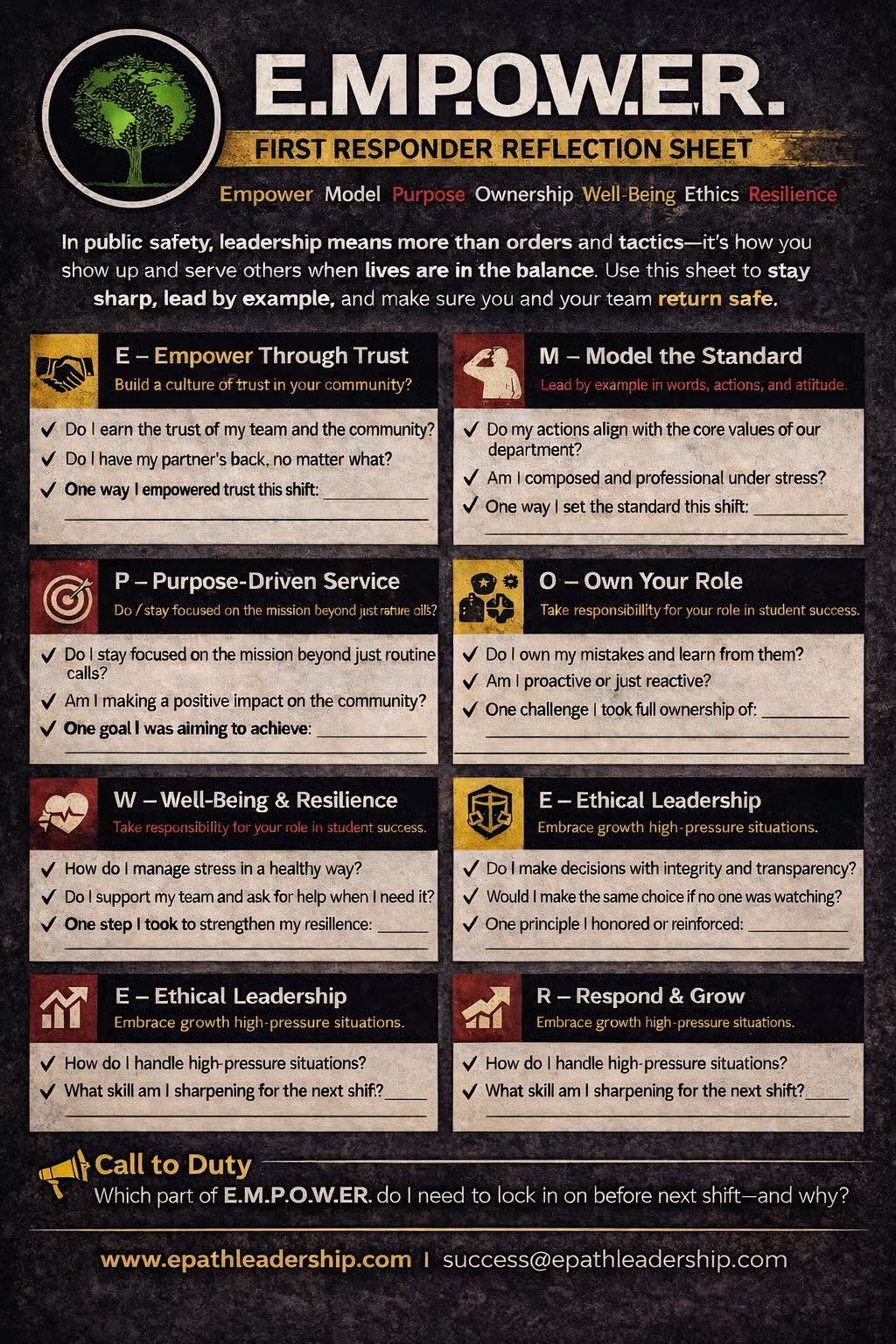
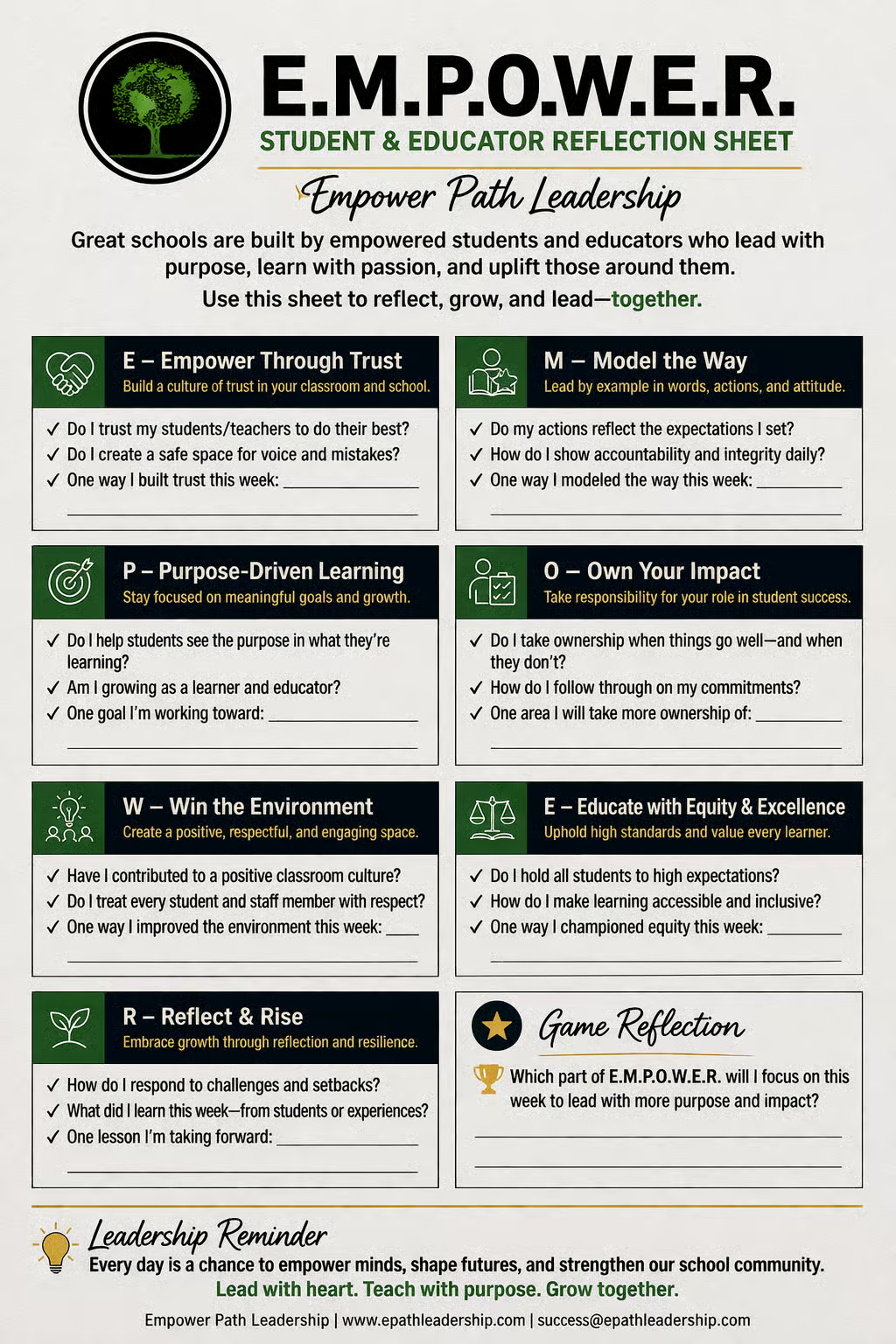
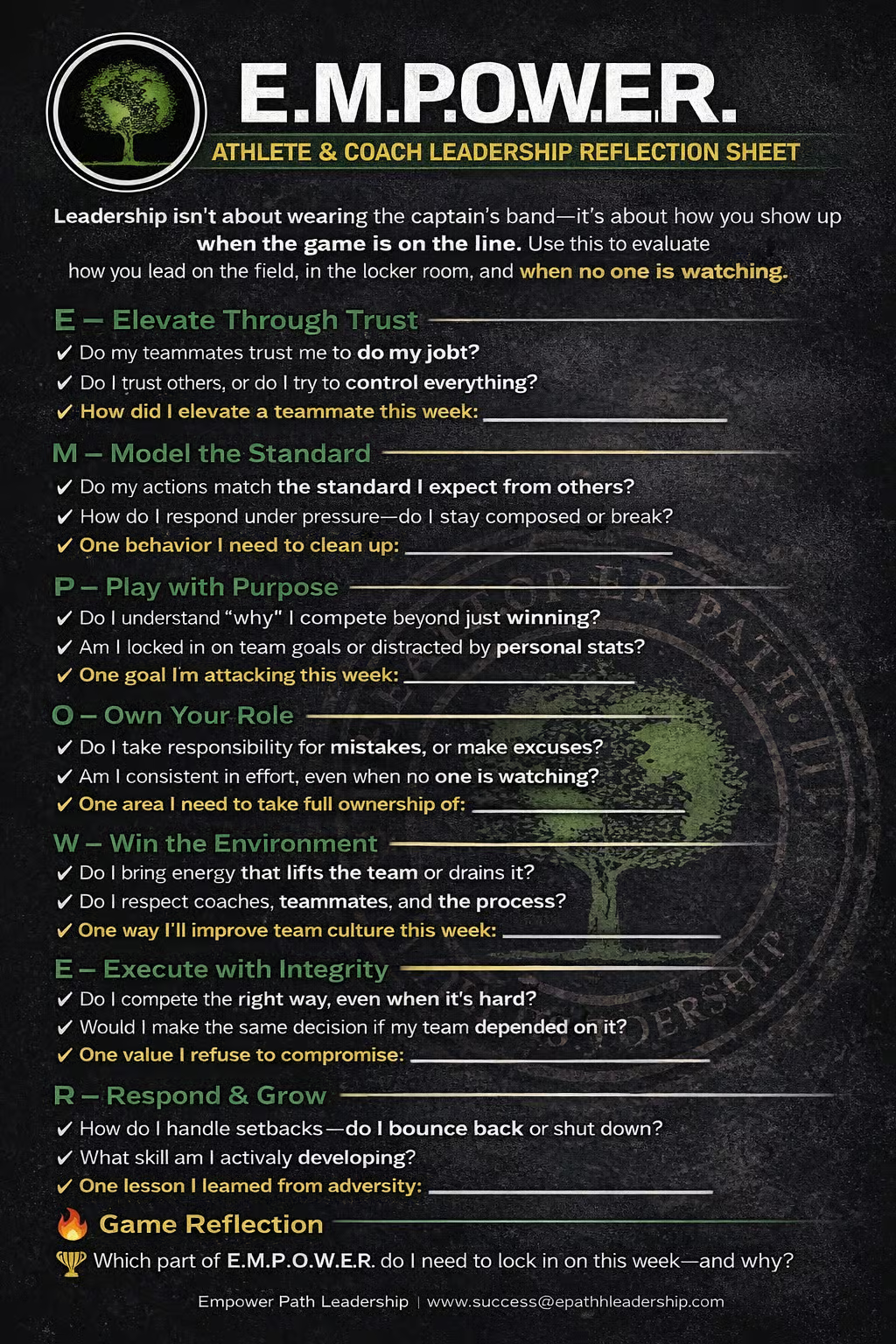
Leadership Reflection Sheets
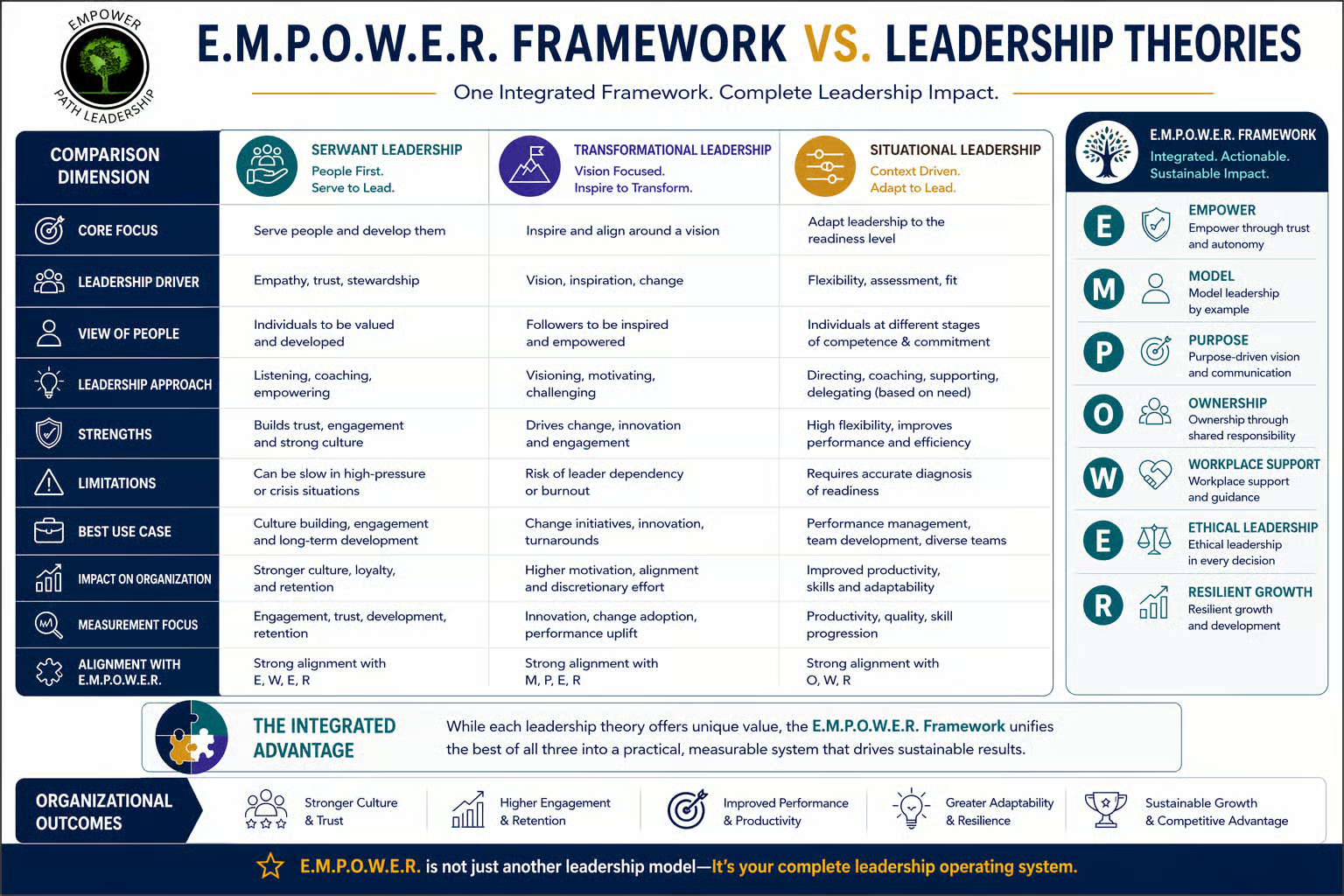
Utilizing the EMPOWER Framework
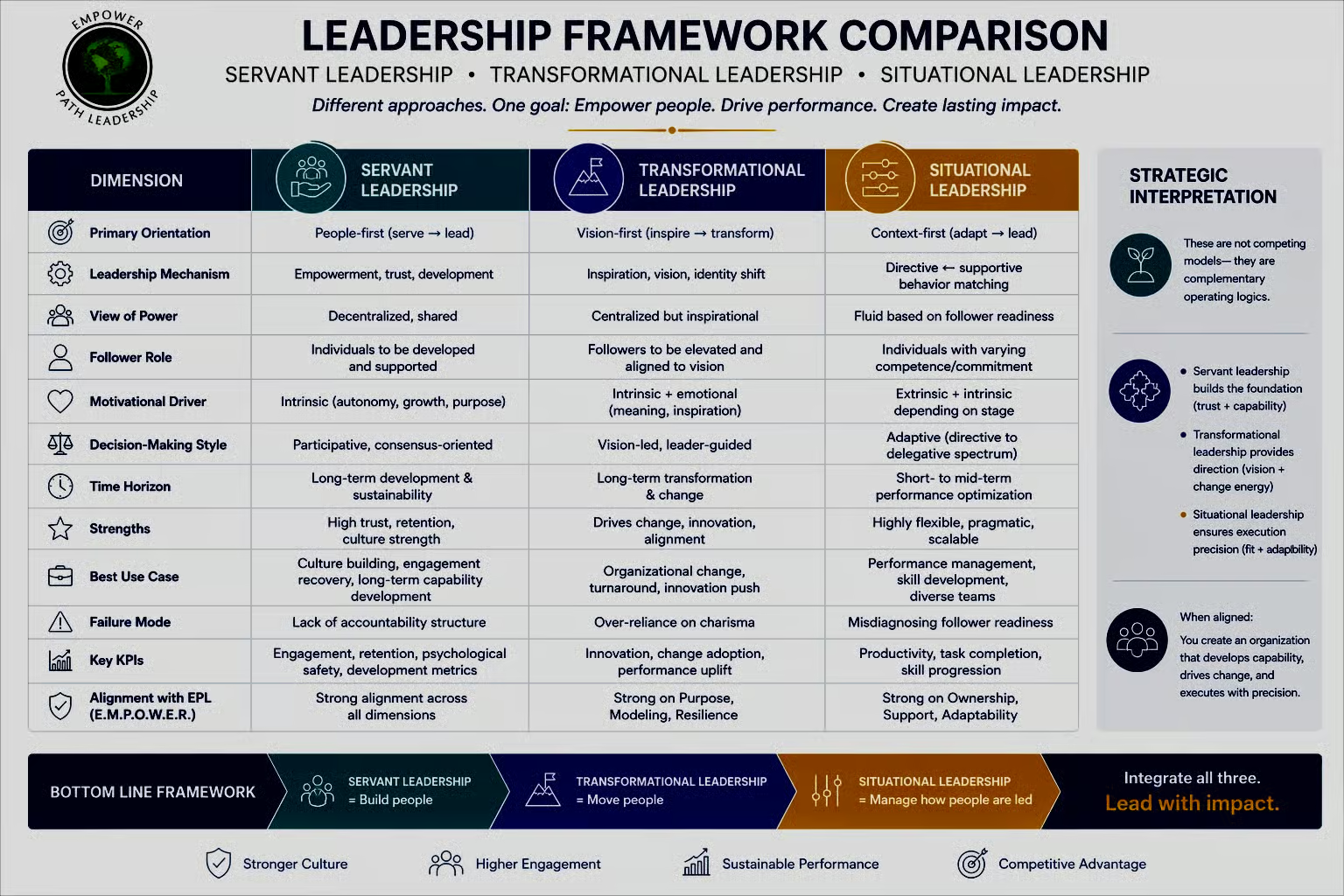
INTEGRATING LEADERSHIP STRATEGIES
These are not competing models-they are complementary operating theories.
High-performing organizations do not rely on just one-they integrate all strategies.

The Real Reason Good Employees Leave. What Burnout, Leadership, and Retention Are Telling Us About Organizational Performance
By Andres Baez, M.S. June 2026
Abstract
Employee burnout, declining engagement, and rising turnover continue to challenge organizations across industries. While many leaders focus on compensation, staffing, and wellness initiatives, emerging research suggests that leadership may be one of the most influential—and often overlooked—drivers of employee well-being and organizational performance. This article explores the relationship between leadership experiences, burnout, job satisfaction, and retention, with a particular focus on the gap between what employees expect from leaders and what they actually experience. Drawing from research in organizational psychology, servant leadership, burnout, and leader-member relationships, the article examines why talented employees disengage, how leadership influences workplace culture, and what organizations can do to create environments where people remain motivated, committed, and successful. The findings offer practical insights for leaders seeking to improve performance, strengthen retention, and build healthier workplace cultures.
Keywords: Employee Burnout, Employee Retention, Leadership Effectiveness, Workplace Culture, Organizational Performance
Leading from the Front, Serving from the Rear: The Balance Every Leader Must Learn
Leadership Balance
Abstract
Leadership effectiveness is often hindered by the misconception that it is a fixed personality trait or a singular style. This article proposes a dynamic model of leadership defined by movement—the "Leadership Pendulum"—which requires the agility to shift between leading from the front and serving from the rear. By integrating contemporary research in organizational psychology and path-goal theory, the discussion examines how leaders must act as "Cultural Architects" to provide directive clarity during periods of crisis or transition. It further explores the transition to leading from the rear as a mechanical necessity for fostering team maturity, trust, and long-term resilience. Ultimately, the article argues that the hallmark of a mature leader is not the adherence to one posture, but the strategic capacity to read the environment and move between directive guidance and empowering support.
How Language Shapes Our Thinking
The Invisible Architect
Abstract
We tend to think of language as a neutral tool for moving ideas from one person to another. In reality, it is a foundational system that actively builds how we think, interpret data, and make high-stakes choices. This article explores the "Foreign Language Effect" and the unique cognitive agility of the multilingual brain, showing how the words we use can either lock us into emotional biases or provide the distance needed for clear, rational analysis. By treating language as a cognitive architect rather than just a medium, we can foster deeper trust and more precise communication in complex environments. But could the very words you use every day be creating invisible barriers to your most effective leadership? Discover how a shift in your linguistic framework can unlock a more adaptive, high-impact way to lead.
Culture, Personality, and Leadership: Why Great Teams Work
Understanding Culture and Personality
Abstract
Culture isn’t something you find in an employee handbook; it’s the lived experience of your team every single day. It shapes the way people talk, think, and show up for work. When you mix that culture with the unique personalities on a team, you get a powerful engine for collaboration and decision-making. By pulling from the playbooks of organizational psychology, human services, and military leadership, this article explores how effective leaders leverage these dynamics to build resilient teams. Moving away from rigid structures toward flexibility and empathy, we look at practical ways to build environments where trust and autonomy are the default. When leaders stop managing and start shaping the culture, organizations don't just hit their goals—they actually thrive.
How Power Shapes Confidence, Judgment, and Relationships
The psychology of Power in Leadership
Abstract
Power changes more than a leader’s position—it reshapes how they think, decide, and connect. This article explores the hidden psychological shifts that come with authority, from the quiet formation of echo chambers to the subtle drift from influence to control. It contrasts enduring, principle-driven leadership—seen in figures like Nelson Mandela and Abraham Lincoln—with the isolating effects of unchecked power. At its core, this piece invites leaders to confront a critical truth: power doesn’t build character—it exposes it.
The Evolution of the Leader Mindset
Moving Beyond Authority to Foster a Culture of Shared Ownership
Abstract
Leadership isn’t a title you hold; it’s a mindset you inhabit every day. This piece dives into the hard shift from old-school command-and-control to a culture of true ownership—where trust and clarity do the heavy lifting that hierarchy used to. We’re moving past the "management" of people and looking at how modern leaders actually influence and grow their teams in an increasingly messy, complex world. It all leads to one defining question: Are you just chasing the next outcome, or are you building the kind of culture that creates them automatically?